
How to Choose Nightstands and Dressers for Your Bedroom
Key takeaways
- Choose nightstands close to the height of the top of your mattress.
- Measure wall space and leave room to open drawers fully.
- Pick dresser style based on your storage needs and room layout.
- Coordinated pieces look polished; mixed pieces add character.
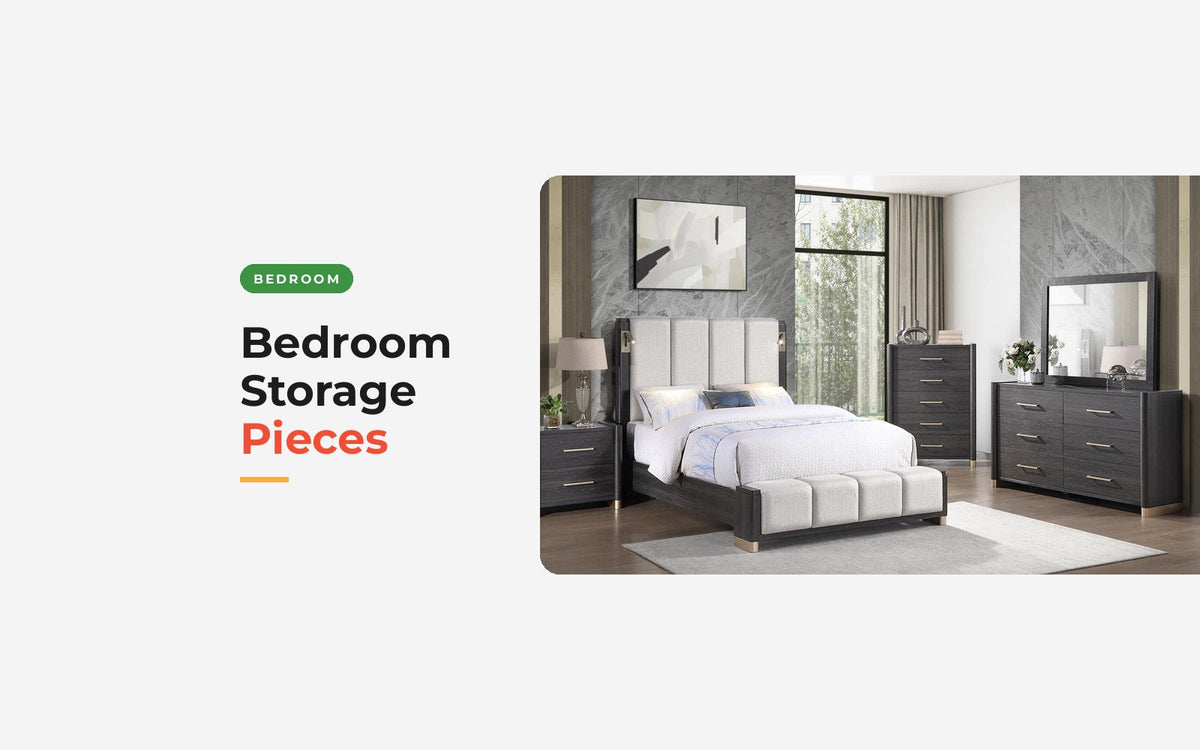
The bed may be the centerpiece of a bedroom, but nightstands and dressers do much of the daily work. They keep essentials close, hold clothing, and help the room feel complete.
Here is how to choose bedroom storage that fits your space and routine.
Choosing Nightstands
Height
A good guideline is to choose a nightstand close to the height of the top of your mattress, often within a few inches. This makes it easy to reach a lamp, phone, or glass of water.
Size
Consider how much surface space you need. A lamp, phone, and book require less space than a lamp, alarm clock, and a stack of reading.
In smaller bedrooms, a narrow nightstand or one with an open shelf can feel lighter.
Storage
- One drawer keeps small items out of sight.
- Two or three drawers offer more storage for books and accessories.
- Open shelves are handy for baskets or display.
Tip: Plan for charging. A nightstand near an outlet, or one with space to route a cord neatly, keeps the area tidy.
Choosing Dressers
Types of dressers
| Type | Description | Best for |
|---|---|---|
| Horizontal dresser | Wide and low with several drawers | Rooms with long open walls |
| Chest of drawers | Tall and narrow | Smaller rooms, limited wall space |
| Dresser with mirror | Dresser paired with a mirror above | Primary bedrooms, getting ready |
| Media chest | Shorter chest with space for a TV | Bedrooms with a TV |
Measuring for a dresser
Measure the wall where the dresser will go. Then plan clearance in front so drawers can open fully and you can stand comfortably. Many designers suggest about 36 inches of clearance in front of a dresser.
Check that the dresser does not block windows, vents, outlets, or closet doors.
Matching or Mixing
Coordinated sets
Bedroom sets that include a bed, nightstands, and dresser in the same finish create a cohesive, polished look. They also simplify decisions. Explore our bedroom sets for coordinated options.
Mixing pieces
Mixing can create a collected, personal look. To keep it cohesive:
- Repeat a finish, such as similar wood tones or hardware.
- Keep proportions balanced between pieces.
- Use a shared color palette.
Quality Details to Check
- Drawers that glide smoothly and open fully
- Sturdy construction and stable legs or base
- Hardware that feels secure
- Anti-tip hardware for tall pieces, especially in homes with children
Arranging Your Bedroom
Place nightstands on both sides of the bed when space allows. Put the dresser on a wall with enough open floor in front of it. A mirror above or near the dresser adds light and function.
For layout help, see our Room Size Guide.
Styling the Top Surfaces
A lamp, a small tray, and one or two personal items are usually enough for a nightstand. On a dresser, group items in odd numbers and vary their height, such as a lamp, a framed photo, and a small plant. Leaving some open surface keeps the room feeling calm and organized.
Mistakes to Avoid
- Choosing nightstands that sit much lower or higher than the mattress
- Placing a dresser where drawers hit the bed or a door
- Overcrowding a small bedroom with oversized storage
- Skipping anti-tip hardware on tall chests in homes with children
Finish the Room
The right nightstands and dressers make a bedroom easier to live in every day. Browse our bedroom sets, and visit our Hempstead or Valley Stream showroom to open the drawers and compare finishes in person.
Shop the look
Find furniture and mattresses for every room at A&M Discount Furniture.


